Relevance 10/10Importance 9/10
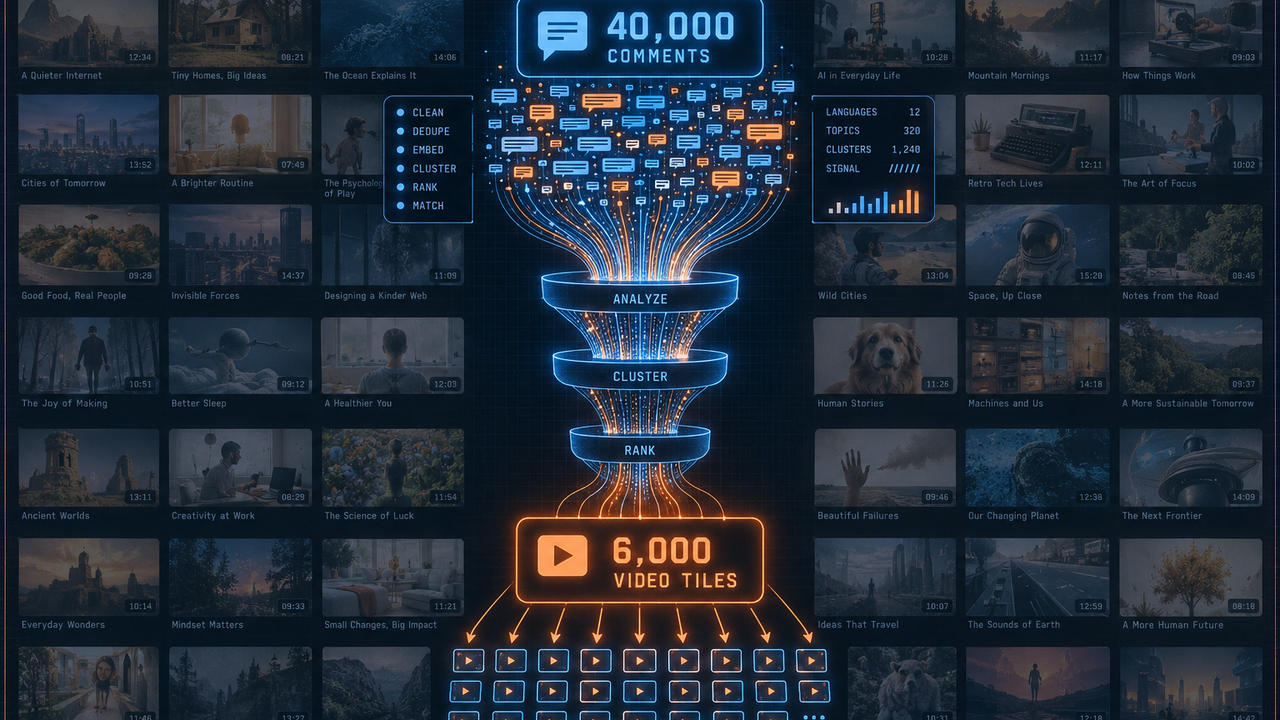
Andrej Karpathy built a YouTube alternative curated entirely from videos that Hacker News commenters have recommended over the last two decades — mining 40,000 comments from 2007 to 2026 down to 6,454 unique videos across 150 topics. The kicker is the build process: he used Claude Code with Opus 5.5 to do essentially all of it, handling only three manual steps himself (Google Cloud credentials, launching a VPS, buying the domain), start to finish in about two hours. It even renders thumbnails at 50 percent to deliberately defuse clickbait.
Relevance 10/10Importance 8/10
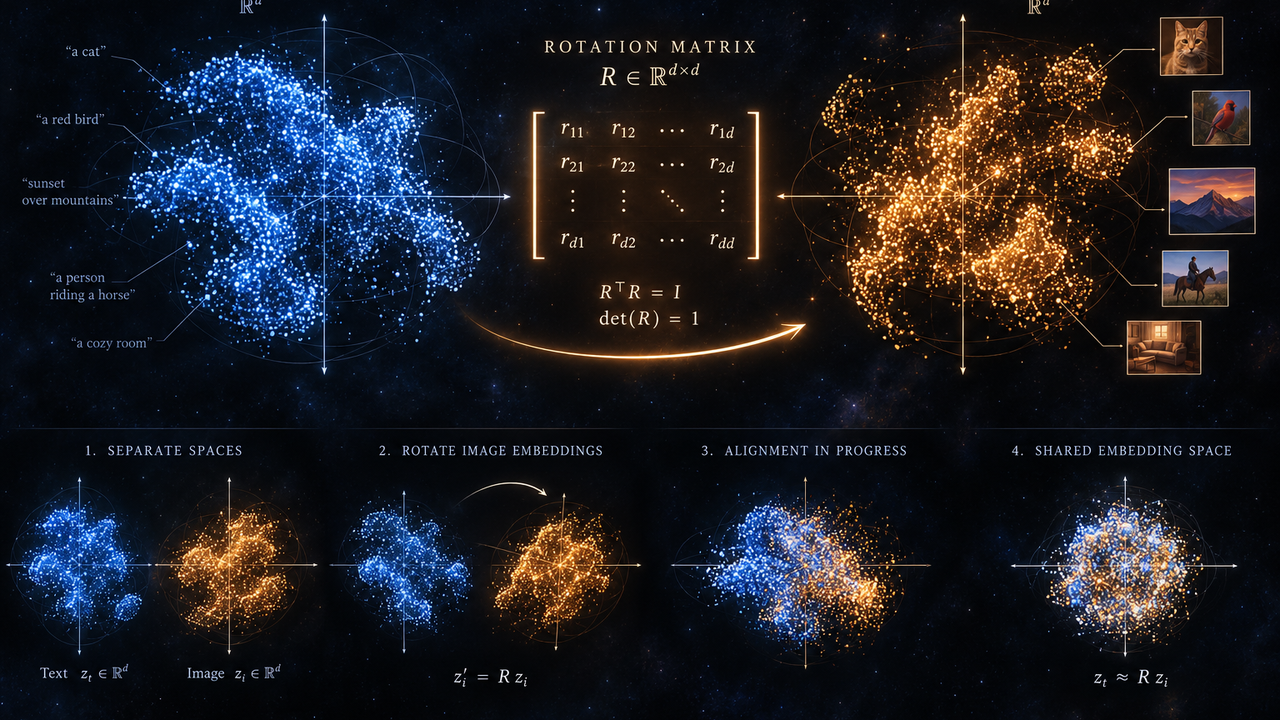
The Platonic Representation Hypothesis says models trained on wildly different modalities converge toward the same internal picture of the world as they scale. This paper turns that conjecture into actual proof for Joint-Embedding Predictive Architectures, showing that JEPAs trained separately on different modalities learn identical representations up to a single rotation — and that training on good paired views needs 42 times fewer samples than next-token prediction to get there. A 109-million-parameter text JEPA beat language models up to 72 billion parameters on alignment with image encoders.
Relevance 9/10Importance 8/10
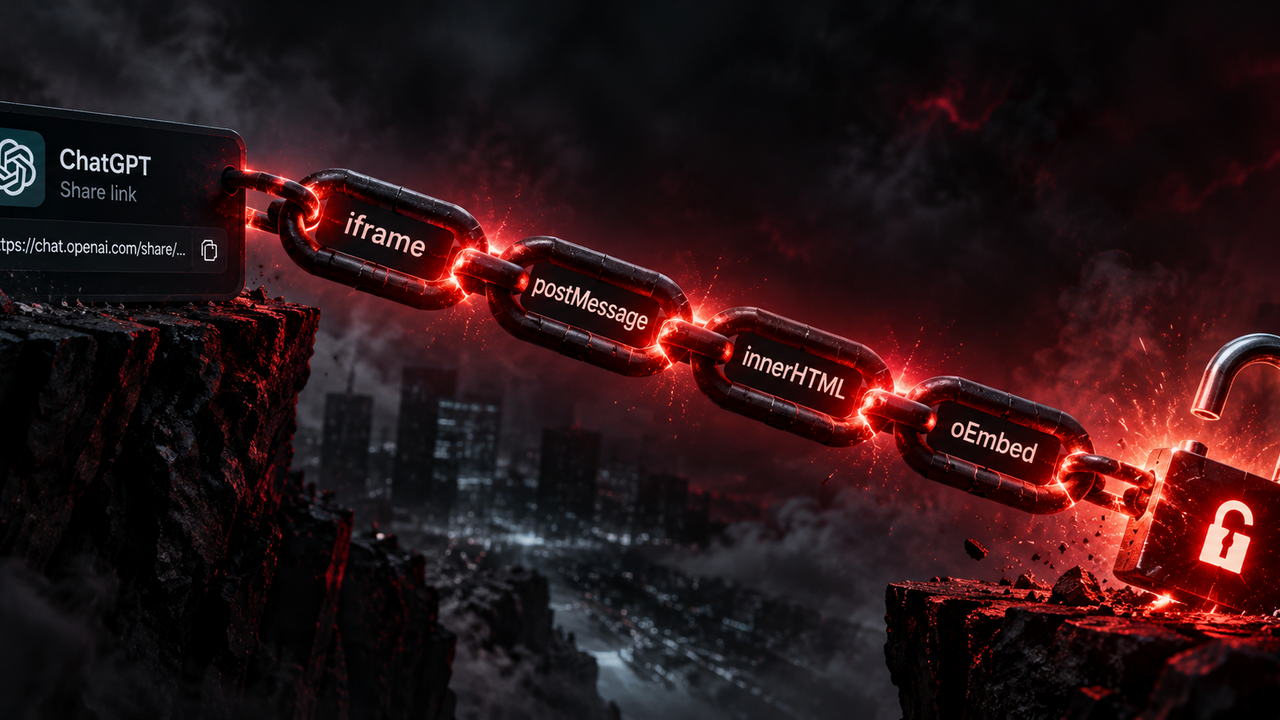
Parameter Labs chained together four separate weaknesses in ChatGPT's HTML preview feature to achieve full account takeover from a single malicious share link. The chain ran through MathLive's virtual keyboard accepting postMessage calls, an innerHTML sink that let a sandboxed iframe inject into the parent page, and a YouTube oEmbed endpoint that was CSP-allowlisted and could reflect executable JavaScript. OpenAI patched it and paid a 5,000 dollar bounty, which Simon Willison politely suggests is light for full account compromise.
Relevance 6/10Importance 7/10
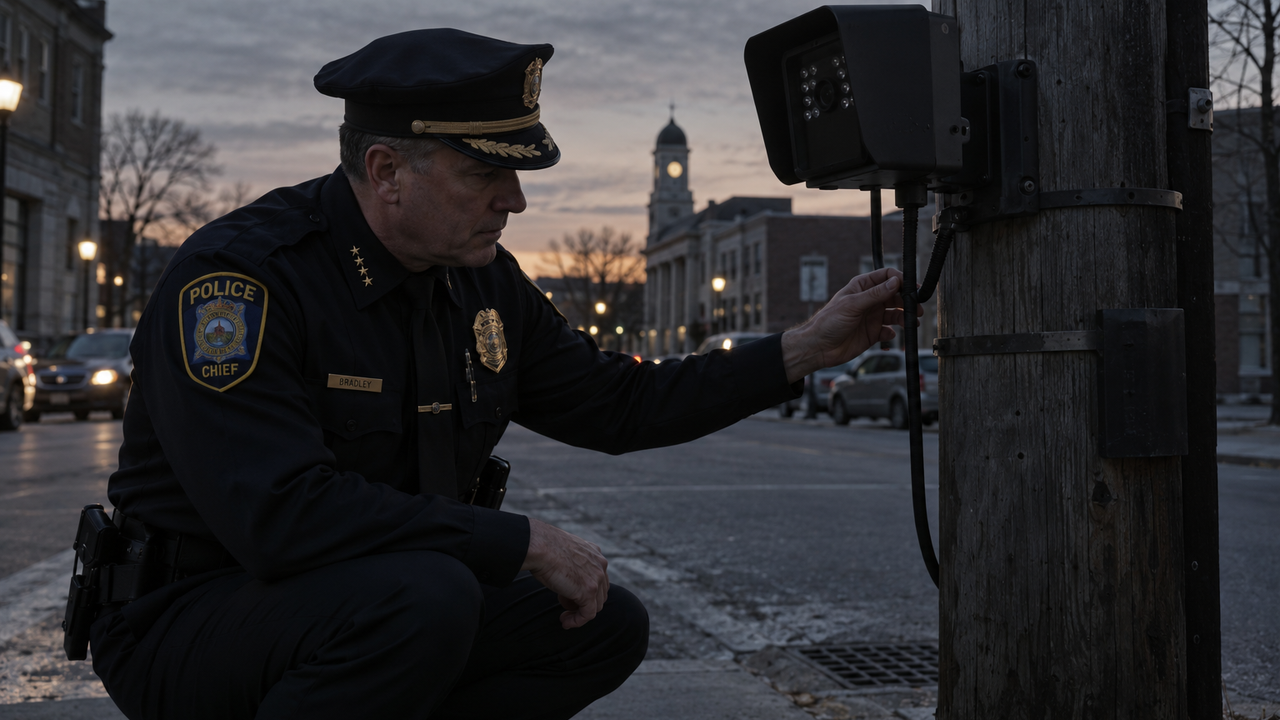
A police chief physically yanked the power on his city's Flock Safety license plate reader cameras after the surveillance startup allegedly kept the network running past the municipality's contract cancellation. It's a remarkably literal escalation in the growing backlash against automated license plate reader networks and who really controls the data once the cameras are up. The piece also floats the "Flock Sock" — covering the units — as the low-tech citizen alternative.
Relevance 5/10Importance 7/10
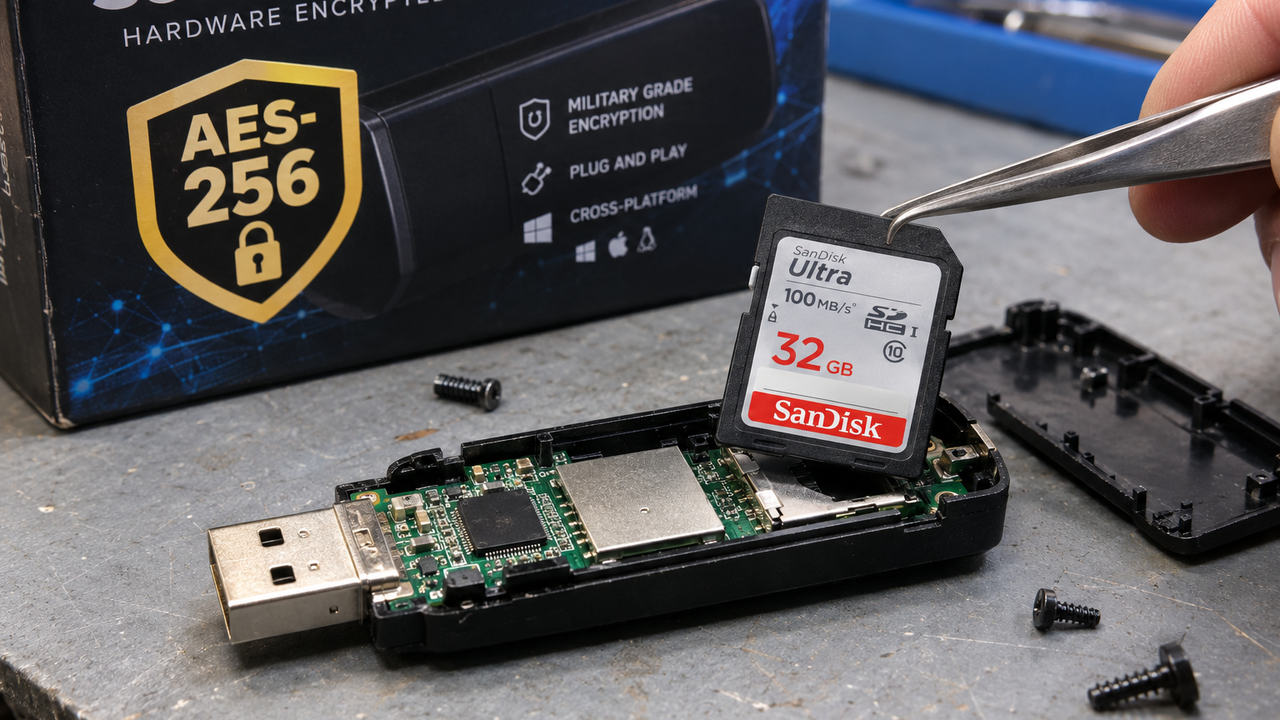
Researcher Xusheng Li tore down Lenovo's ThinkPlus FU100, marketed as hardware AES-256 encrypted, and found a bog-standard SD card inside with nothing encrypted at all — the fingerprint sensor merely gated the USB link. Worse, the drive echoed the correct password back over USB in plaintext for the host software to compare. An AI-assisted follow-up audit of other "secure" USB products turned up hardcoded keys, exposed passwords, and a backdoor across the category.
Relevance 6/10Importance 5/10
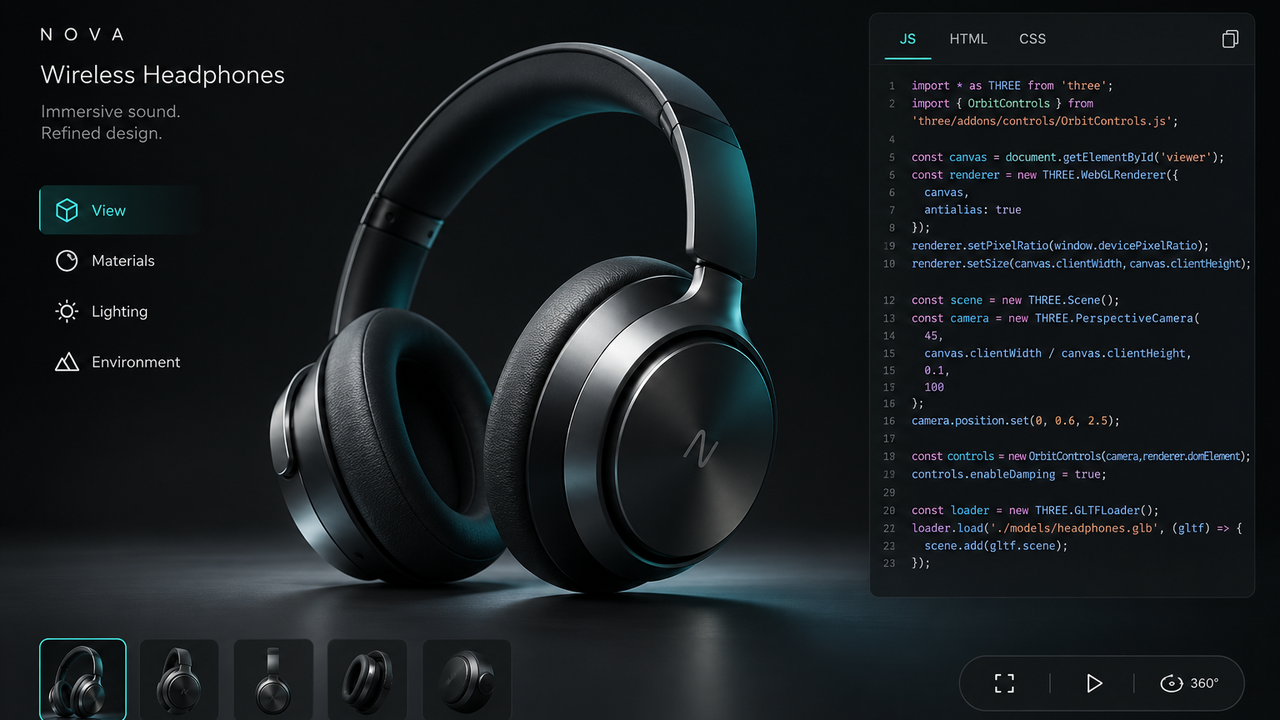
Phoria2 is a ground-up rewrite of a 2013 canvas-based 3D library onto WebGL 2 — zero runtime dependencies, plain ES modules, and views that only redraw when something actually changes. It covers PBR materials, instancing, shadows, particles, object picking, text labels, and glTF loading. Notably, the author built the validation layer so error messages explain exactly how to fix the problem, explicitly so AI coding agents can use the library as effectively as humans.
Relevance 3/10Importance 8/10
Carsten Hartmann and colleagues analyzed frequency data from twelve electricity systems across five continents and found a razor-sharp spectral spike at exactly a one-minute period, phase-coherent over long stretches. The culprit: clock-synchronized self-test routines in battery-backed uninterruptible power supplies and storage systems, all firing on the same wall-clock tick and stacking into a global demand pulse. Not grid-threatening yet, but it adds turbine wear — and the fix is as simple as jittering the timers.
Relevance 3/10Importance 4/10
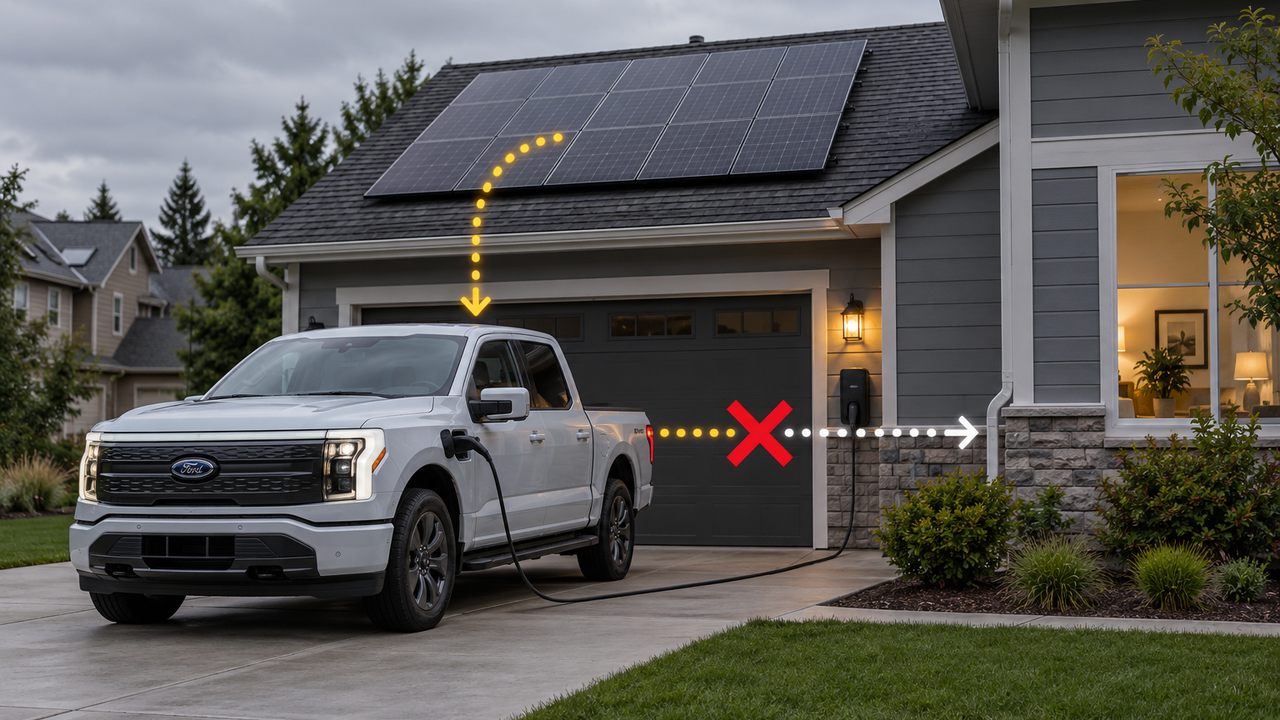
Jeff Kaufman wanted the obvious setup — solar panels charging an EV that also backs up the house during an outage — and found that essentially nobody ships it. Manufacturers treat vehicle-to-home as a discharge-only mode rather than allowing simultaneous solar charging, and GM, Ford, and Kia have either no true bidirectional capability or discontinued products. The only working combination today is Tesla Powershare plus a Cybertruck, which costs far more than just buying a home battery, so he's buying the battery.
Relevance 1/10Importance 5/10
In the early 1990s Parma farmer Claudio Grossi found an unlabeled sack of seeds in his attic, probably saved by his great-grandfather, dumped them in a manure pile, and forgot about them. They sprouted six-foot wheat stalks bearing seven ears each with multicolored kernels — matching a biblical description closely enough that he named it grano del miracolo, miracle wheat. It also turns out to be drought-hardy and tall enough to shade out weeds, which makes it genuinely interesting for climate-stressed agriculture.
Relevance 2/10Importance 3/10
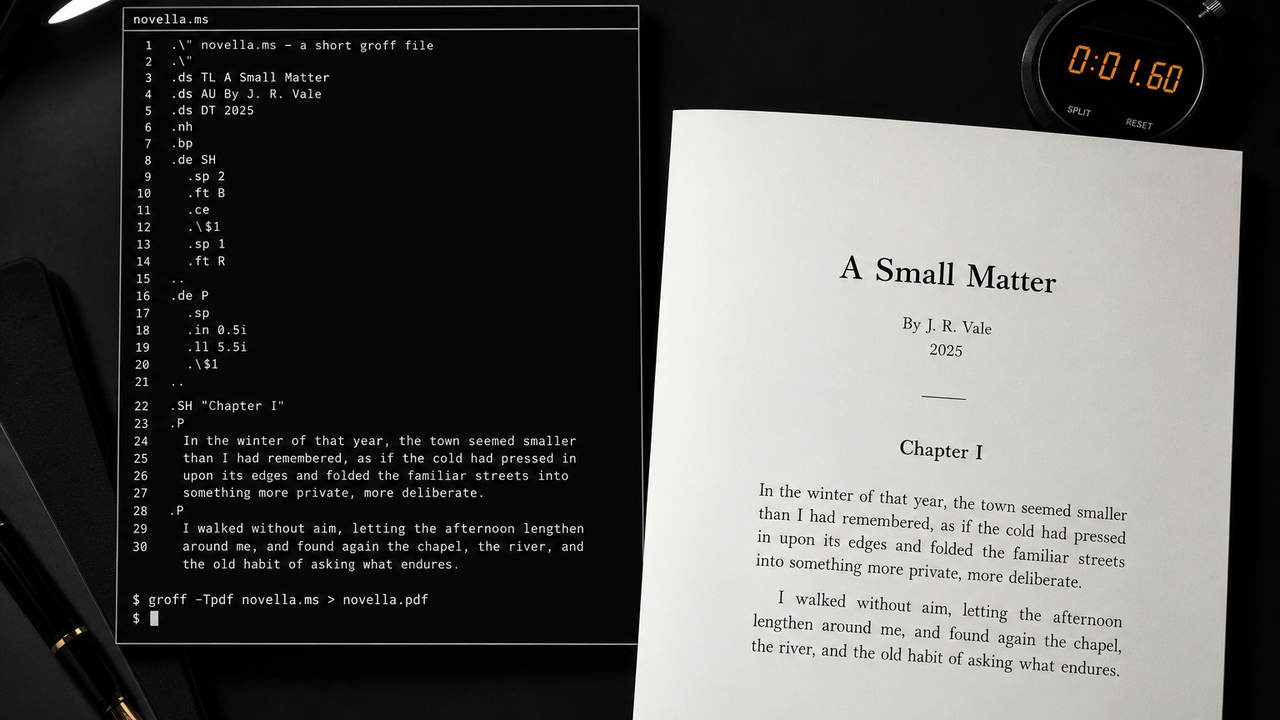
The author typeset two novellas, roughly 50 and 120 pages, in groff — the Unix man page engine — using a custom macro package with exactly three macros. The 120-page PDF builds in 1.6 seconds on aging hardware, versus modern tooling that the author says feels like walking in mud, and the justification quality beats the alternatives. Page furniture is handled with traps and environment switching, German hyphenation via hla and hpf, and a Perl preprocessor converts simplified Markdown back to groff for Vim syntax highlighting.

 HN Briefing AM