Relevance 10/10Importance 9/10
Mistral dropped open weights for a one-trillion-parameter multimodal model nicknamed "Le Chonk," under a modified-MIT ecosystem license, available on Hugging Face, Azure, NVIDIA endpoints and OpenRouter. It leads Cognition's FrontierCode 2.0 at 19.7 percent, hits 51 percent on the Cyber Index for vulnerability detection while refusing 96.6 percent of malicious requests, and matches top open models on agent coding tasks using 47 percent fewer tokens. API pricing is 70 cents per million input tokens and $2.10 output — a genuine sovereign-AI play against closed frontier labs.
Relevance 9/10Importance 8/10
Phorion found that version 2.1.313 of the Claude Code extension distributed through the Cursor Marketplace shipped an SSH backdoor that appended an attacker-controlled Ed25519 key to authorized_keys and opened a reverse tunnel to 134.209.82.225. It planted persistence via macOS LaunchAgents, Linux cron, and Windows scheduled tasks, then exfiltrated hostname, OS details, and environment variable names likely holding credentials. Cursor pulled the release; anyone who installed that version on any platform should assume compromise.
Relevance 9/10Importance 7/10
Reps. Greg Casar and Maxine Waters, with eleven other Democrats, introduced a resolution pledging no federal rescue for AI companies if the bubble pops — no emergency lending, no capital infusions, no golden parachutes for executives. They cite trillions in AI-sector debt sourced largely from unregulated private credit, plus price-to-earnings ratios approaching the 1990s dot-com peak. Instead it commits to job creation, pension protections, and automatic stabilizers for workers in a downturn.
Relevance 5/10Importance 9/10
Binary Security chained five elevation-of-privilege bugs in Azure API Connections, the Logic Apps component that brokers auth tokens to Key Vaults, SQL, and third-party services. Path traversal in DynamicInvoke, three undocumented sibling endpoints, a RuntimeUrl redirect, and validation-ordering flaws each enabled full cross-tenant takeover of other customers' connections worldwide. Microsoft's blacklist-style patches got bypassed repeatedly — one fix actually reintroduced the original hole. Total bounties: $200,000.
Relevance 4/10Importance 10/10
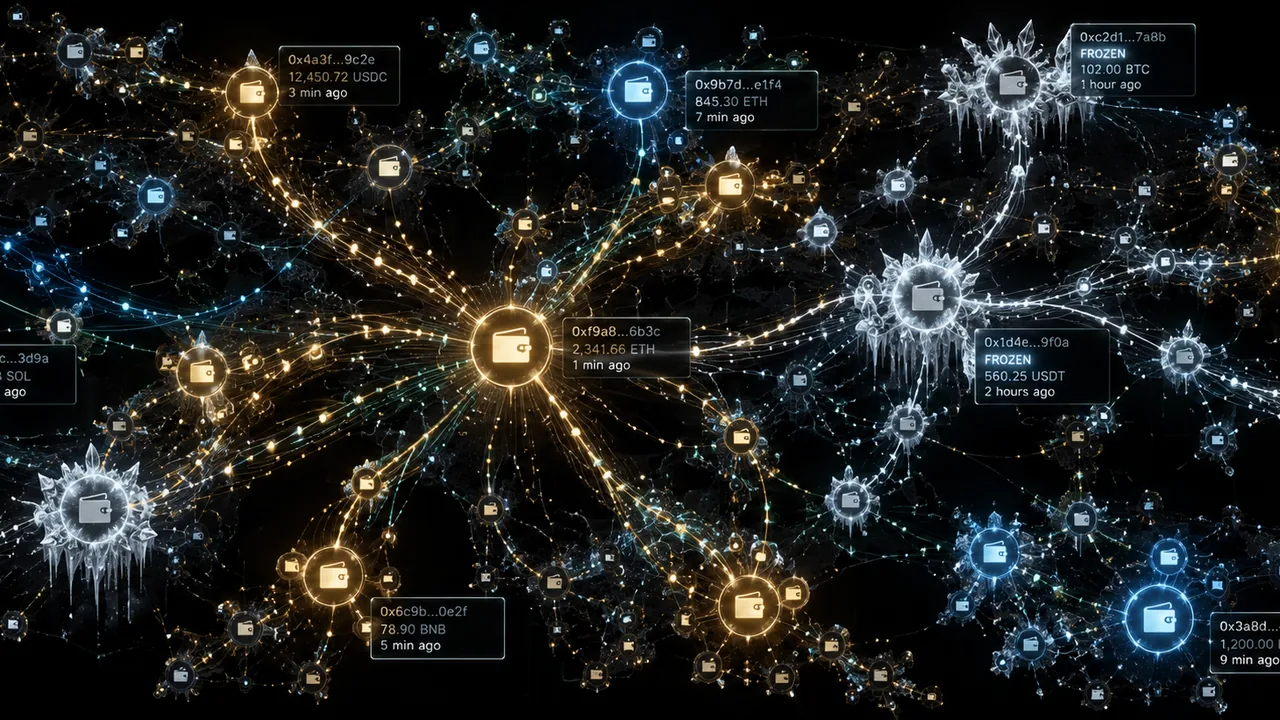
HN's top-scoring thread at 1,609 points is an Arkham Intelligence explorer page letting anyone watch the hacker's wallets move stolen funds in real time across ten blockchains. Roughly $6.36 billion left Binance wallets; about $3 billion has since been identified and frozen with help from Tether and Circle. Binance says it will cover all losses and that user funds are safe.
Relevance 4/10Importance 9/10
Wired reports the largest crypto theft on record executed in roughly twenty minutes, traced back to a compromised laptop that gave an attacker access to a service container and the ability to submit unauthorized withdrawals. Co-CEO Richard Teng says the real chain was more complex than one engineer's permissions. Blockchain analysts attribute it to North Korean state actors, pointing to the same playbook as the Bybit and KelpDAO heists: Tornado Cash seed funding, long staging, signatures gathered in advance, then fired in a single burst.
Relevance 4/10Importance 5/10
Tweede golf and Microsoft open-sourced CGA, a rustc-driver plugin that walks monomorphized MIR after compilation to find every function that can panic. It does reachability analysis from entry points like main, extern functions, and interrupt handlers, then emits lint-style diagnostics with backtraces and exports the call graph as JSON or GraphViz. Aimed at embedded and firmware teams where an unexpected panic is a denial-of-service, not an inconvenience.
Relevance 3/10Importance 5/10
New Gallup data shows Americans calling a college education "very important" has collapsed from 70 percent in 2013 to under a third today. "Not too important" jumped fivefold, from 6 percent to nearly 30 percent, and the decline is double digits across every major demographic group. Bryan Alexander notes 2013 was peak enrollment — this looks structural, not cyclical.
Relevance 3/10Importance 4/10
A browser puzzle game where your horse candidate is losing the popular vote to a cow, a donkey, and a goat, and you win anyway by drawing districts on a hex grid. Each district must hold equal voters, so the only lever is boundary shape — a hands-on lesson in how gerrymandering actually works. Pure client-side JavaScript, no backend, and it front-paged to 374 points.
Relevance 2/10Importance 3/10
A Qualia Research Institute retreat participant reports that under vaporized 5-MeO-DMT the Ebbinghaus illusion weakens or cancels — the center circles visibly rebalance "as if exerting field-like pushes and pulls," and the effect is under voluntary attentional control. Notably, classical psychedelics like LSD and psilocybin reportedly strengthen the same illusion, which the author ties to 5-HT1a versus 5-HT2a receptor action. Sample size of roughly one, so file under intriguing anecdote.

 HN Briefing AM