Relevance 10/10Importance 9/10
Cerebras published the engineering details of how it serves frontier-scale models on wafer-scale silicon, spreading the 3-trillion-parameter Kimi K3 across 59 WSE-3T wafers — 35 for linear-attention layers, 24 for dense layers plus KV cache. Each wafer holds 44 GB of on-chip memory, and because only activations cross chips over RDMA at roughly two microseconds a hop, weights never move. The payoff they claim is 1,000 to 2,000-plus tokens per second via pipeline parallelism.
Relevance 9/10Importance 9/10
Dan Luu argues that AI tooling has collapsed the cost of projects that used to be prohibitively expensive, so builders should stop settling for incremental work. His examples include pgrust — a Postgres rewrite in Rust that surfaced real database bugs — plus custom regex engines and bespoke games, all built in a fraction of the time they'd have taken a decade ago. He engages Yossi Kreinin's counterargument that most developers lack the expertise to steer AI through complex systems, conceding the risk but insisting disciplined self-checking and testing make the ambition worth it.
Relevance 8/10Importance 8/10
Goose is a memory-safe systems language designed by Wouter van Oortmerssen with implementation credited to Claude Fable — an AI collaborator — and it ships with no heap allocator, no garbage collector, and no lifetime annotations. The model is stack-based with inline nested data structures, so data never moves and references stay valid even as arrays grow; the tradeoff is no escaping closures, no dynamic dispatch, and mandatory whole-program compilation. It compiles to C and can run in-process via an embedded TinyCC backend, with benchmarks claimed to beat both C++ and Rust.
Relevance 8/10Importance 7/10
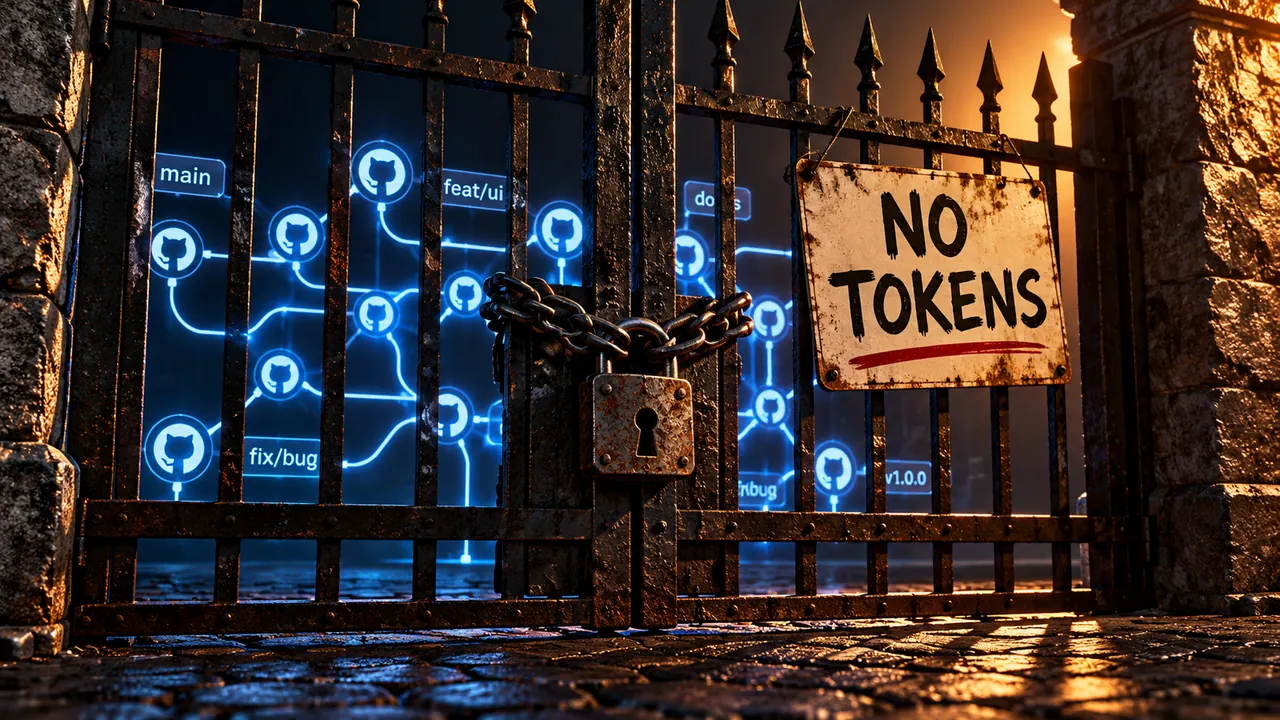
A moderator post titled "Your tokens aren't valuable: No more AI" bars any project that uses AI, was made by AI, or is intended for AI, and additionally requires projects to be a year old, actively maintained, and backed by roughly three-plus contributors before they can be shared. The policy also blocks non-English participation, on the grounds that mods can't distinguish AI translation from human translation. Backlash was immediate, spawning a rival subreddit, r/trueopensource, and pointed reminders that the Linux kernel itself now carries AI-generated code.
Relevance 8/10Importance 7/10
Researcher mike64_t dug into a Samsung device binary and found it quietly running an INT8-quantized TensorFlow Lite model on 960-by-540 screenshots every few seconds to guess which game you're playing. The file is literally named alex.tflite and appears to be AlexNet, doing nearest-neighbor feature comparisons against a local database. By his account it fails roughly ninety-nine percent of the time, and the results are being collected with a consent gate apparently slated to arrive later.
Relevance 7/10Importance 6/10
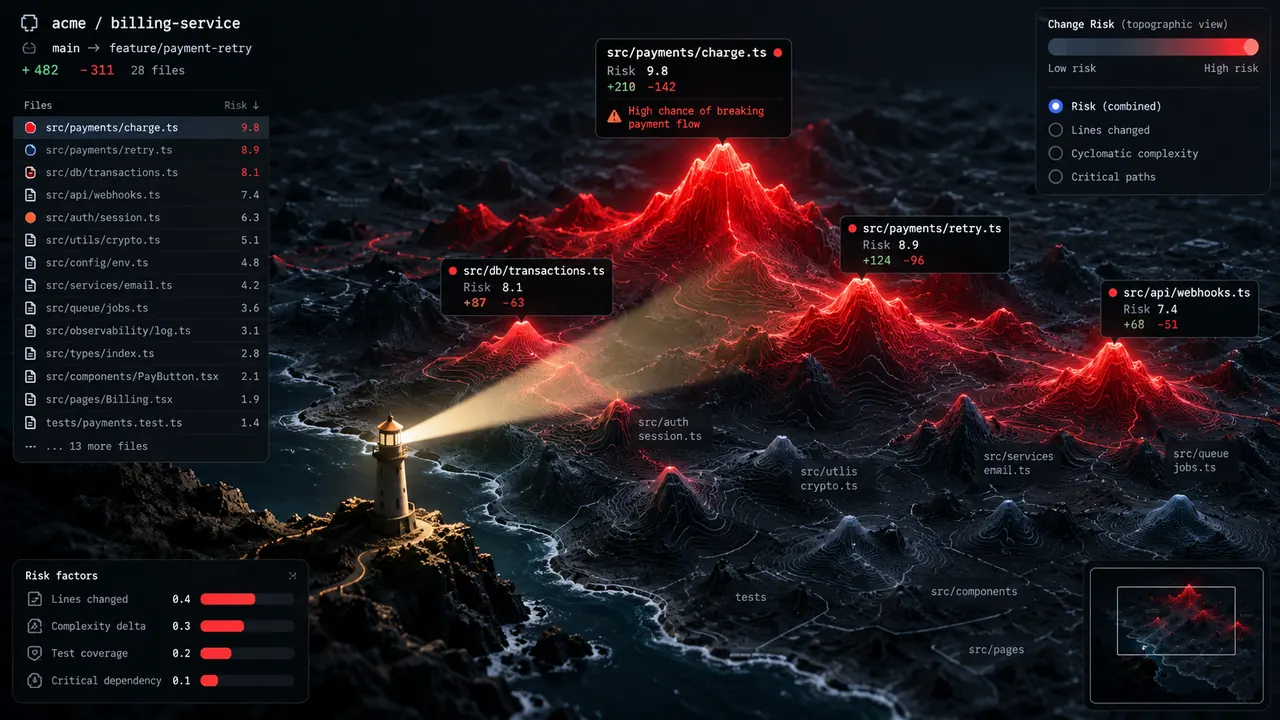
Farol is a free, open-source CLI and GitHub Action that builds a risk map of a pull request for whoever has to approve it — and notably, it does not use an LLM. It runs the actual TypeScript, Go, and Python compilers over the whole codebase to build declaration graphs showing what a change genuinely reaches, then ranks files by risk, flags breaking API contracts, measures diff coverage, and surfaces security findings. Everything runs locally and deterministically, and the author frames it as the step that comes after AI code review rather than instead of it.
Relevance 4/10Importance 5/10
fheroes2 is a from-scratch, multiplatform C++ reimplementation of the Heroes of Might and Magic II engine, GPL v2 licensed. It targets faithful reproduction of the original while layering on high-resolution graphics, a smarter AI opponent, and interface refinements. The project is actively maintained with about 3,600 stars and 510 forks, and openly recruits developers, artists, and translators.
Relevance 2/10Importance 5/10
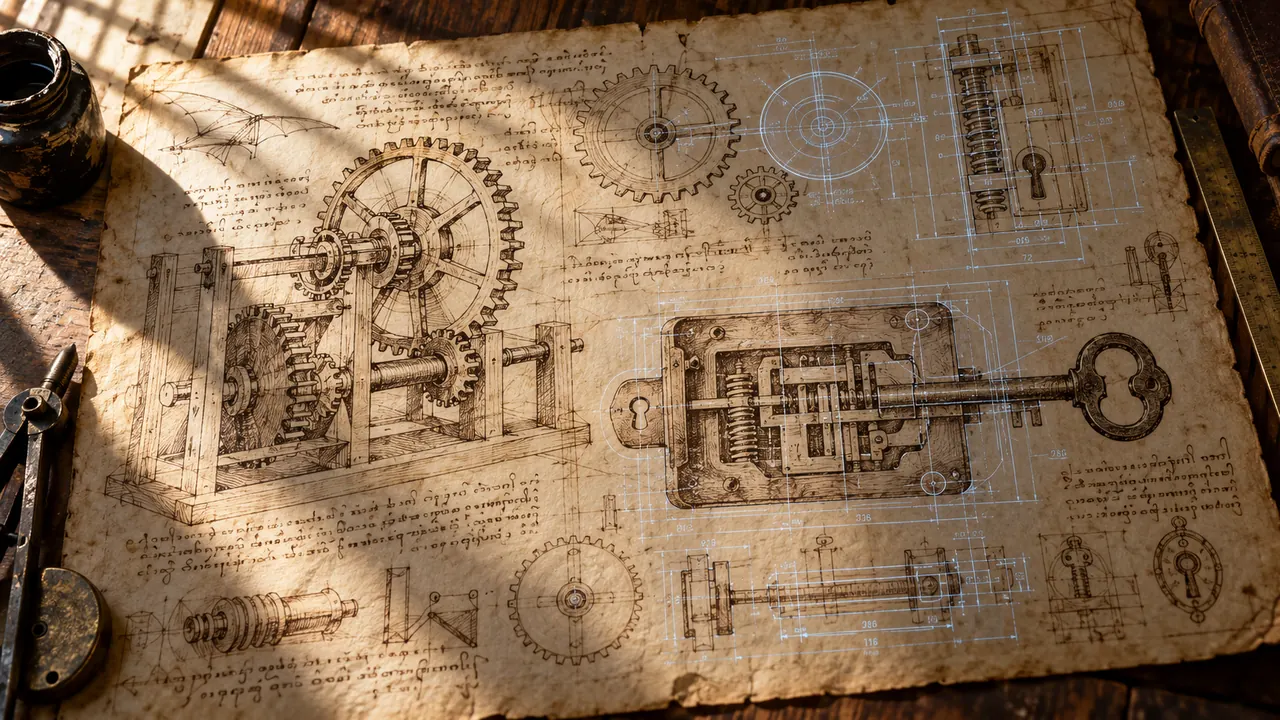
The Löffelholz Codex project is the first page-by-page scholarly treatment of a 154-page illustrated manuscript drawn in 1505 by the Nuremberg knight Martin Löffelholz, documenting tools, machines, locks, and weapons. Every page pairs a high-resolution facsimile with an Early New High German transcription, a modern English reading, and an engineering interpretation. 127 pages are reviewed so far with 27 still pending, unlocking a document held in Kraków's Jagiellonian Library that had gone largely unstudied.
Relevance 1/10Importance 3/10
A kottke.org post profiles a Japanese workshop founded in 1882 that still makes katsuobushi using hand-firing techniques roughly two centuries old. Fresh bonito is filleted and boiled, then smoke-dried over open flame more than ten times to lock in umami, followed by fermentation and months of sun-drying. The finished block is dense enough that it's described as the world's hardest food — closer to wood than to fish.
Relevance 1/10Importance 2/10
LEGO confirmed a Daft Punk collaboration born on LEGO Ideas, where a fan set called "Daft Punk Concert" by a builder with the handle RobotRock crossed 10,000 supporters and got greenlit for development. Price, piece count, and release date are all still unannounced — the FAQ only jokes it's "probably not as big as the real stage." The original designer will work alongside LEGO's in-house team on the final product.

 HN Briefing AM