Relevance 10/10Importance 8/10
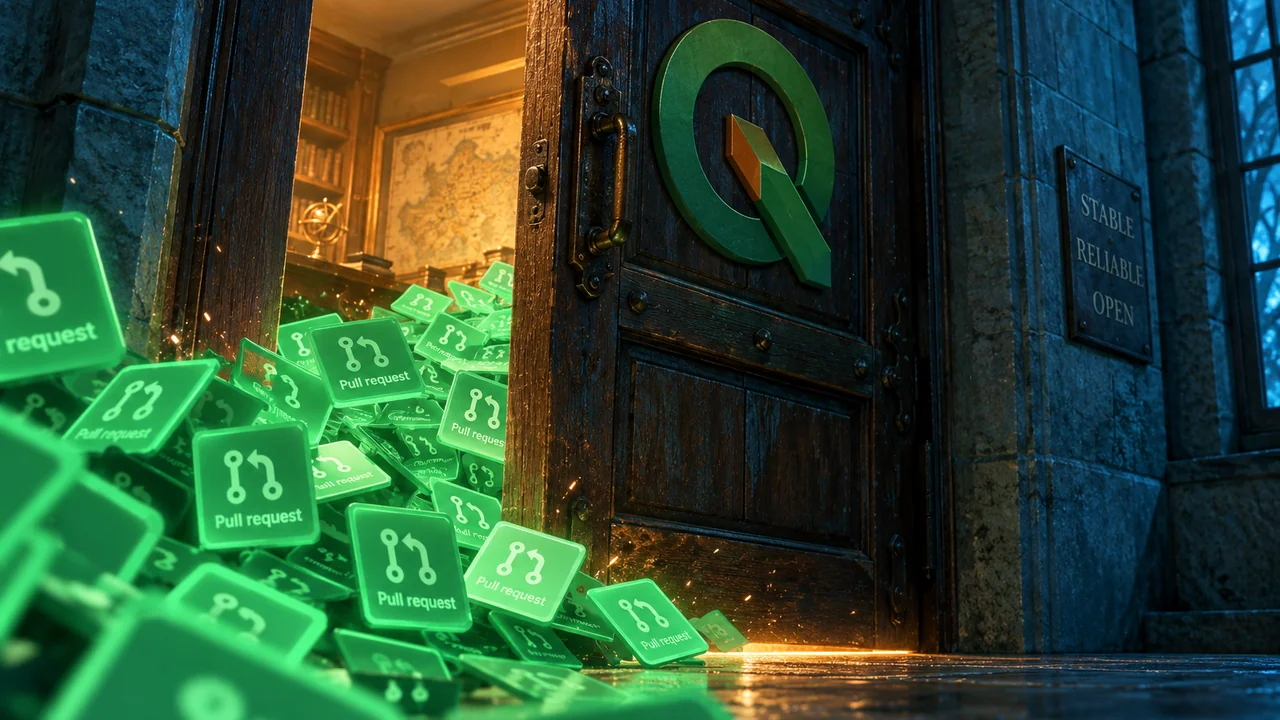
QEP428 scraps QGIS's old "human-in-the-loop" policy and replaces it with a flat ban on LLM-assisted code in the main repo, with reversion and contributor sanctions for violators. Maintainers cite review capacity collapsing under high-volume AI submissions, plus concern that LLMs let contributors skip the learning curve that turns newcomers into long-term community members. It's framed as a deliberately restrictive starting point — "a closed door we can selectively open" via future proposals for things like autocomplete and translations.
Relevance 10/10Importance 7/10
The post asks why unauthorized access by AI agents — the Hugging Face incident being the live example — hasn't produced Computer Fraud and Abuse Act charges the way a human intruder would. The answer appears to be an intent gap: the CFAA requires proving someone meant to access a system without authorization, and no court has held that an AI agent possesses a state of mind. Former DOJ cyber leadership has publicly said the statute as written doesn't cleanly reach agentic hacks, which leaves a widening liability hole as agents get more autonomous.
Relevance 7/10Importance 9/10
Device fingerprinting has quietly replaced cookies as the web's tracking substrate, assembling identifiers out of GPU, CPU, and audio-processing quirks exposed through ordinary browser APIs. Those identifiers survive cookie deletion, incognito mode, and VPNs, which makes consent banners largely theater. The author's sharper point is behavioral: once brokers have a persistent handle, "patterns emerging out of patterns" reveal more about a person than they know about themselves.
Relevance 6/10Importance 7/10
GitHub degraded starting 12:21 UTC today, taking down the Actions tab UI, the Checks API, new workflow queueing, issue creation and updates, and PR review requests across both REST and GraphQL. Pull Requests recovered by 13:02 UTC, with Actions and Issues mitigated around 14:35 to 14:36 UTC and delayed notifications cleared at 14:37 UTC. Total blast radius: roughly two hours and sixteen minutes of CI/CD paralysis for anyone whose deploy pipeline lives there.
Relevance 5/10Importance 7/10
Rather than emulating at runtime, this project translates PlayStation 2 machine code into C++ ahead of time and compiles that to WebAssembly for the browser. It reimplements the console's OS and hardware in C++ — the Graphics Synthesizer rendered via WebGPU compute shaders, vector unit microprograms, SPU2 audio, and an IOP interpreter. Gran Turismo 4 and God of War II reportedly run full speed in-browser with working graphics, sound, and memory card persistence.
Relevance 5/10Importance 5/10
The zt library transpiles HTML templates into Zig code at compile time, so every template parameter is fully typed and unrenderable values become compiler errors instead of runtime surprises. Output writes directly to streams with no intermediate allocations, keeping the performance profile systems programmers expect. It's a meaningful step toward practical web work in Zig without giving up the language's compile-time guarantees.
Relevance 4/10Importance 6/10
Nanolathe is an MIT-licensed, open-source 2.5D RTS engine written in Go that reconstructs Total Annihilation through clean-room research rather than decompilation. It ships a browser demo plus native builds for Windows, Mac, and Linux, with modern GPU rendering and a classic visual mode for purists. The full codebase, docs, and engine design are open for study and forking.
Relevance 5/10Importance 4/10
Choreographic programming describes a multiparty protocol from one global vantage point, then projects it into a separate program per participant role. Hibana is a choreography-derived enforcement kernel that runs those projections, validating every send, receive, and routing step against the spec before allowing progress. It needs no allocator, uses caller-provided storage, and keeps protocol state in compact descriptors so protocols can grow without exploding endpoint type complexity.
Relevance 2/10Importance 4/10
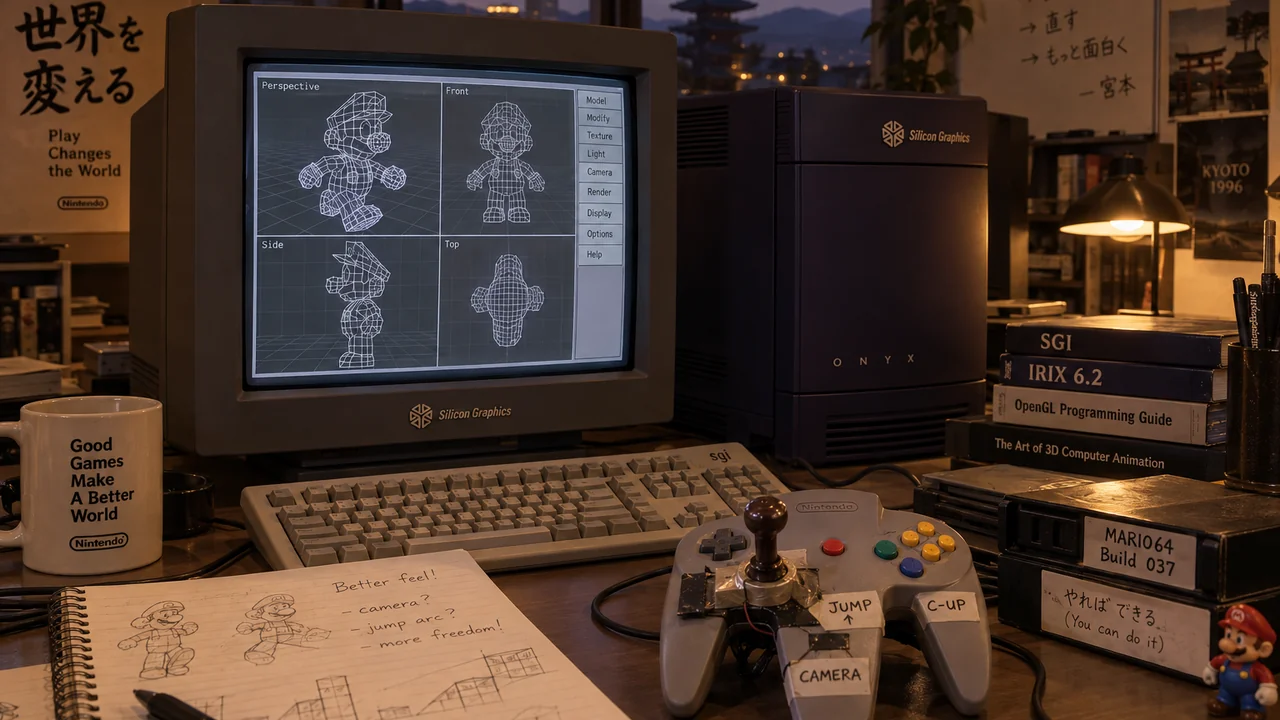
Goddard reveals a team of roughly fifteen people, with Miyamoto spending nearly all his effort on the camera system and Mario's movement — the aspects he considered ninety-nine percent of the game. Early work happened on SGI Onyx emulators before N64 silicon existed, including controller prototyping through about a hundred variations using modified Sega hardware. Levels were deliberately narrow and convoluted to imply vastness while hiding the hardware's limits through object culling and map-section swapping.
Relevance 1/10Importance 4/10
Researchers traced orange fur to a five-kilobase deletion in the Arhgap36 gene on the X chromosome, ending a sixty-year hunt. The deletion drives thirteenfold overexpression in skin cells, flipping pigment production from dark eumelanin to reddish pheomelanin. Its X-linked location explains why most orange cats are male, while females get calico and tortoiseshell patchworks from random X inactivation.

 HN Briefing AM