Intel guided Q4 revenue to $15–16B and adjusted EPS of just $0.25, badly missing consensus of roughly $17.07B and $0.43, even though Q3 adjusted EPS of $0.52 beat on data center strength. Management blamed a faster-than-expected PC decline (~12% unit contraction in 2026, another ~10% in 2027), a memory shortage inflating PC costs, and an accidental fab shutdown in Israel. Shares fell as much as 23–25% after hours and in premarket after closing Thursday at $92.07.
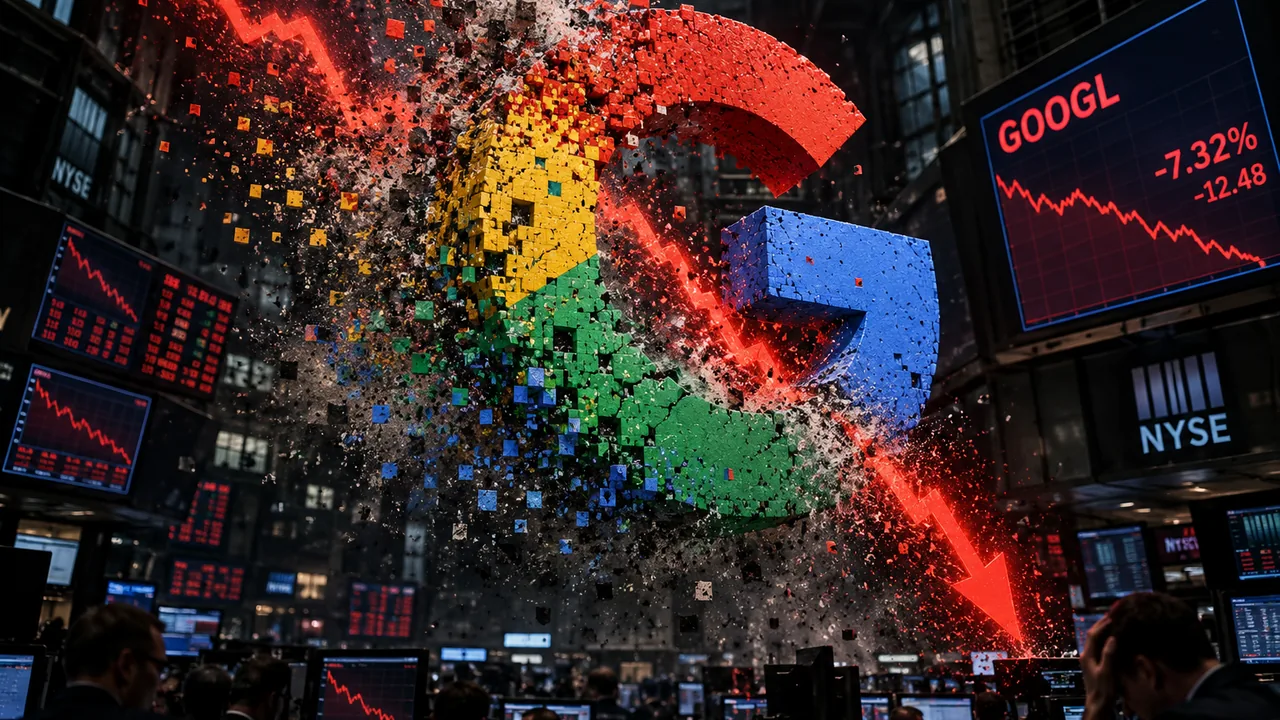
Alphabet fell nearly 13% Thursday, the steepest single session since its 2004 IPO, after search advertising revenue of $63.35 billion grew 12% but missed estimates for a second straight quarter. Free cash flow came in at negative $9.07 billion versus roughly negative $2.7–3.5 billion expected. BofA now values Google Search at a lower multiple than fossil fuel stocks; Google Cloud growth of over 100% wasn't enough to offset the capex-versus-returns anxiety.
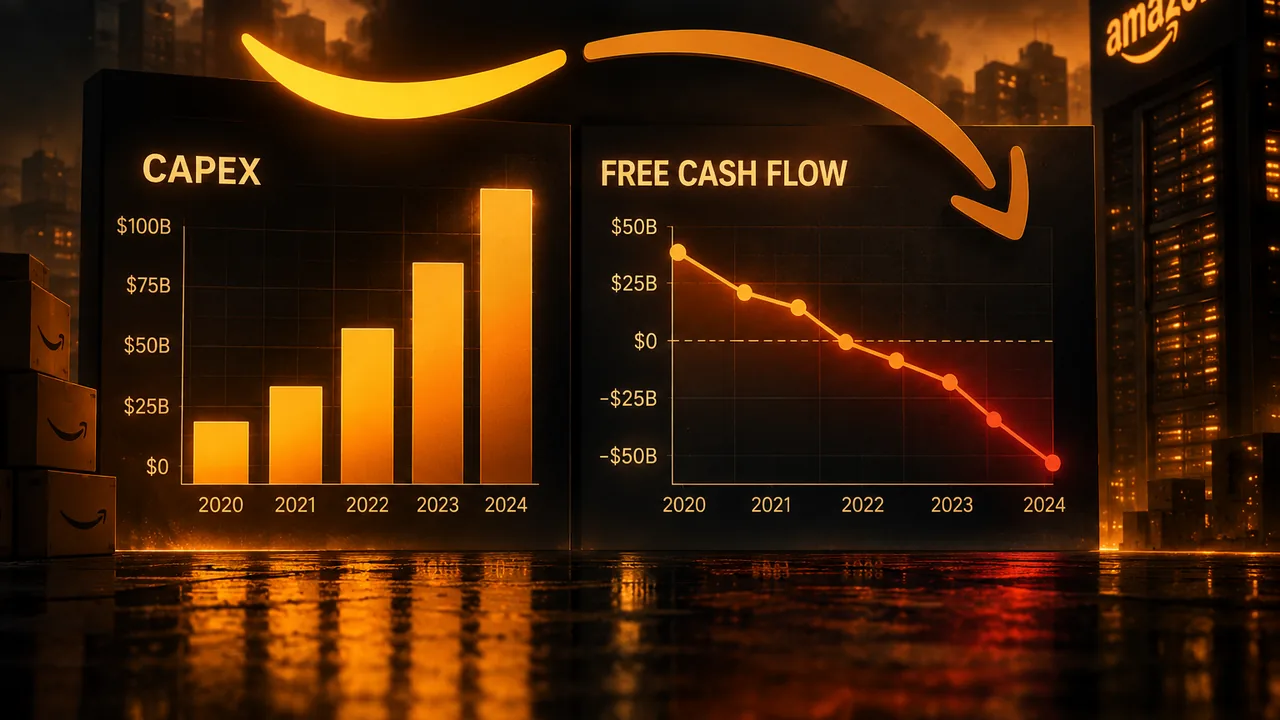
Q3 EPS of $1.89 missed the ~$1.96 consensus on revenue of $201.9 billion versus $202.3 billion expected. Capex net of incentives hit $75.9 billion against $42.4 billion of operating cash flow — a $33.5 billion quarterly cash burn — and the company signaled another capex step-up next year on roughly $220 billion of infrastructure spend. The offset: record operating income of $28.1 billion at a 13.9% margin, and AWS posting its fastest growth in nearly five years.
Microsoft posted adjusted EPS of $4.89 versus the $4.73 LSEG estimate, with Azure revenue up 48% against a 44.3% forecast and Q2 guidance pointing to 49–50%. The new Agent and Infrastructure segment delivered $76.8 billion, up 25%, now over 80% of total revenue. The wrinkle: capex and finance leases of $45.2 billion came in under the ~$50.7 billion analysts modeled, and full-year capex was trimmed to $170 billion from $175 billion. UBS still took its target to $700 from $675; Wells Fargo went to $750.
Microsoft priced $25 billion of senior unsecured debt across up to ten tranches, with maturities from two to 40 years, to fund capex, buybacks and general corporate purposes. Initial demand reportedly topped $100 billion; the offering is set to close November 4. Tech has now issued over $313 billion of investment-grade paper in 2026 to fund AI infrastructure.
Intel's warning sparked a global semiconductor selloff, with AMD, Arm, Qualcomm, Nvidia, Broadcom and Micron falling between roughly 2% and 9% premarket. AMD was off about 7.84% (still up 9.6% on the week), Micron down about 4.38% (up 6.46% weekly), and Nvidia down about 2.64% but holding a 1.28% weekly gain. Nasdaq 100 futures sank 2.4% while S&P 500 contracts fell 1.1% and Dow futures were marginally higher.
Reddit beat on earnings but warned that search referrals fell by more than a million per week on average in October, and that its 130.3 million daily active uniques could decline by a low-double-digit percentage in Q4. US daily actives slipped from 53.2 million in Q2 to 50.7 million in Q3, down 2% year over year. CEO Steve Huffman is pivoting to a logged-in-first experience to blunt scraping and traffic loss — the clearest public read yet on AI search cannibalizing the open web.
Nvidia is said to be negotiating multibillion-dollar debt guarantees for neocloud Nscale to build a 460-megawatt data center, underpinned by a roughly $45 billion leasing contract with Anthropic. It's another instance of Nvidia extending its balance sheet to seed demand for its own silicon — a structure that's drawing increasing scrutiny as AI credit spreads widen, with CoreWeave unsecured bond yields recently nearing 15%.
Nvidia is investing roughly $3 billion into Meta's capital increase, with AMD joining for a combined figure reported near $4 billion, alongside deeper engineering work to optimize training and inference for Meta's Muse model family. Meta separately said it would seek up to $95 billion in financing for its AI buildout. The circular-financing pattern — chipmakers funding their own customers — is now a core part of the bear case on AI capex quality.
OpenAI is near closing up to $30 billion at a $1.25 trillion pre-money valuation, led by Coatue and UAE investors, positioning ahead of Anthropic's anticipated mid-November market debut. Anthropic's filing disclosed about $16.3 billion in first-half 2026 revenue versus $1.16 billion a year earlier, in what could be the largest IPO on record. Neither is publicly traded yet — but Anthropic's print will be the first hard public comp for frontier-lab economics.

 AI Stocks