SK Hynix fell 9.3% and Samsung Electronics dropped 7.4% in Seoul while SoftBank Group sank roughly 8% in Tokyo, pulling MSCI's Asia-Pacific ex-Japan index down more than 2% to its lowest since late July. The trigger: ChangXin Memory Technologies flagged "key progress" on a 4F² DRAM cell architecture and said it plans commercial DDR5 server RDIMMs using it by the end of 2026. Analysts caution CXMT hasn't proven it can manufacture at scale — the WSJ reports its tech still trails Samsung, SK Hynix and Micron by two or three generations.
Micron closed Monday at $989.04, down about 3.9%, and traded down roughly another 2.8% in premarket as the CXMT competition story extended the memory selloff. SanDisk slid as much as 6% to around $1,484, Seagate fell about 4% and Western Digital dropped 2.6% in sympathy. Context matters: Micron is still up roughly 245% year to date, so a lot of this is profit-taking in the year's most crowded trade.
Speaking at the DBS Asia Future Forward conference in Singapore, Broadcom CEO Hock Tan warned that financing constraints may soon eclipse chip supply as the limiting factor on AI infrastructure buildouts; Intel's Lip-Bu Tan echoed it, citing rising borrowing costs and ROI questions. Broadcom traded near $356.60, off about 1.4%. Worth noting the pushback — some observers argue Tan's demand commentary was actually bullish and the market read the funding remark out of context.
At the OCP Global Summit in San Jose, Microsoft announced the Maia 300 inference accelerator for a 2027 launch, built on TSMC's N2P process with a chiplet design. A 96-accelerator rack is pitched at up to seven times the throughput of Maia 200, with roughly 40% better tokens-per-megawatt than leading GPU systems, and the rollout could exceed one million chips next year. Microsoft shares added about 1% — a direct shot at reducing Nvidia and AMD dependence.
September revenue came in at NT$511.86 billion, up 54.6% year over year and above NT$500 billion for a second straight month, putting Q3 revenue at a record NT$1.49 trillion — about $46.7 billion, up 50% y/y and ahead of the NT$1.46 trillion LSEG consensus. Earnings land October 15, with analysts modeling net profit up 64% to roughly NT$740.8 billion. Margins and 2027 capex guidance are the swing factors for the whole AI supply chain.
Meta released two models, Muse Wonder and Muse Wonder Full, claiming benchmark parity or better versus top OpenAI and Anthropic systems in areas like lease analysis and data interpretation. Shares rose about 3.4% to roughly $742.96, one of the few green names in large-cap tech. That said, the pop trailed September's 11% single-day jump on the Muse agent launch, and the open question is whether subscriptions can carry the capex load.
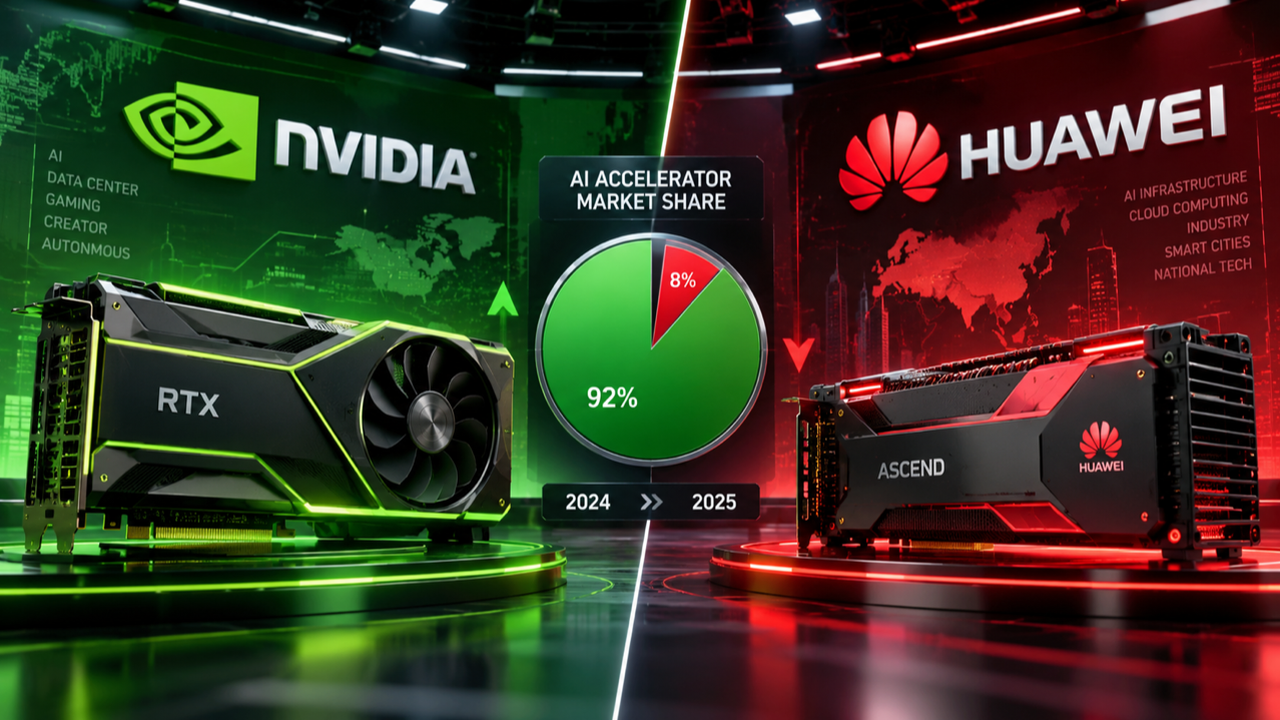
An IDC report seen by Reuters shows Nvidia shipped 678,000 AI accelerators in China in the first half of 2026, down 44% year over year, while Huawei shipped 572,000, up from more than 300,000. Alibaba's T-Head took 7%, Cambricon 5%, Baidu's Kunlunxin 4%. Nvidia closed Monday at $226.32, down 1.29%, against a Street consensus target in the $315 to $329 range with 58 of 61 analysts at Buy or better.
Anthropic has confidentially submitted a draft Form S-1 to the SEC, days after closing a $65 billion Series H at a reported $965 billion post-money valuation. Reports point to IPO marketing as early as the week of November 9, with a possible valuation up to $2 trillion. OpenAI, meanwhile, has ruled out a 2026 listing — 2027 at the earliest — while holding early talks on a funding round of roughly $30 billion. Neither is publicly traded today.
Baird lifted its Palantir target to $250 from $200, arguing cheaper AI models broaden enterprise adoption, following a Goldman Sachs upgrade with a $230 target. Separately, Ondas and Palantir formed Regna AI, a standalone company building mission-specialized models for sovereign defense deployments on drones, stratospheric balloons, ground vehicles and command nodes in denied or degraded-connectivity conditions. Ondas rose about 4% to roughly $7.
Per a WSJ report picked up by Bloomberg, Amazon is negotiating to acquire Israeli startup Decart, whose software lets developers move workloads between different AI chips and extract more performance from existing hardware. Anthropic reportedly walked away from a roughly $6 billion deal for the company last month. Nothing is confirmed, but the strategic logic lines up with hyperscalers trying to cut per-token inference costs.

 AI Stocks