The Nasdaq Composite slid roughly 2.25% Thursday while the Dow eked out a gain of 11.89 points to 52,867.98 — a textbook rotation out of the AI complex. Chip, data-storage and the four AI megacaps accounted for about 93% of the Nasdaq-100's net market-value loss on the session. Intel fell 8.1% after a Susquehanna target cut to $105, and Marvell dropped about 9.4%.
Q3 revenue rose 26% to $64.60 billion against $63.37 billion expected, with net income of $9.9 billion, or $3.83 a share — and the stock still fell about 7% to close at $648.85. Free cash flow came in at negative $2.12 billion as capex including finance leases hit $34.9 billion, full-year capex guidance moved to $135–$145 billion, and total spending commitments ballooned to $825 billion from $700 billion in July.
Lam posted revenue of $8.22 billion and non-GAAP EPS of $2.20, both beats, with operating margin above 40% for the first time and memory at a record 46% of systems revenue. Shares still fell about 11.8% to $230.15, the lowest since April, after CFO Doug Bettinger warned supply-chain constraints could push some December-quarter shipments into March. Applied Materials dropped roughly 6% and ASML about 4% in sympathy.
Speaking at GTC Berlin, Jensen Huang said demand for neoclouds is extraordinary but "what is missing in the middle is the working capital to fuel that growth," citing a scarcity of capital he expects to be solved. He also floated making AI chips a financeable asset and signaled openness to Chinese memory partners including CXMT. NVDA closed down 4.40% at $212.21, with intraday losses reaching 6%.
CoreWeave fell 10.1% to $55.60, a new 52-week low, after Bernstein moved to Underperform with the target cut to $51 from $74, flagging an $85 billion financing need against roughly $9 billion secured. Nebius slid about 6% despite fresh Citi financing, and IREN also hit new 2026 lows as debt-funded AI capacity came under scrutiny.
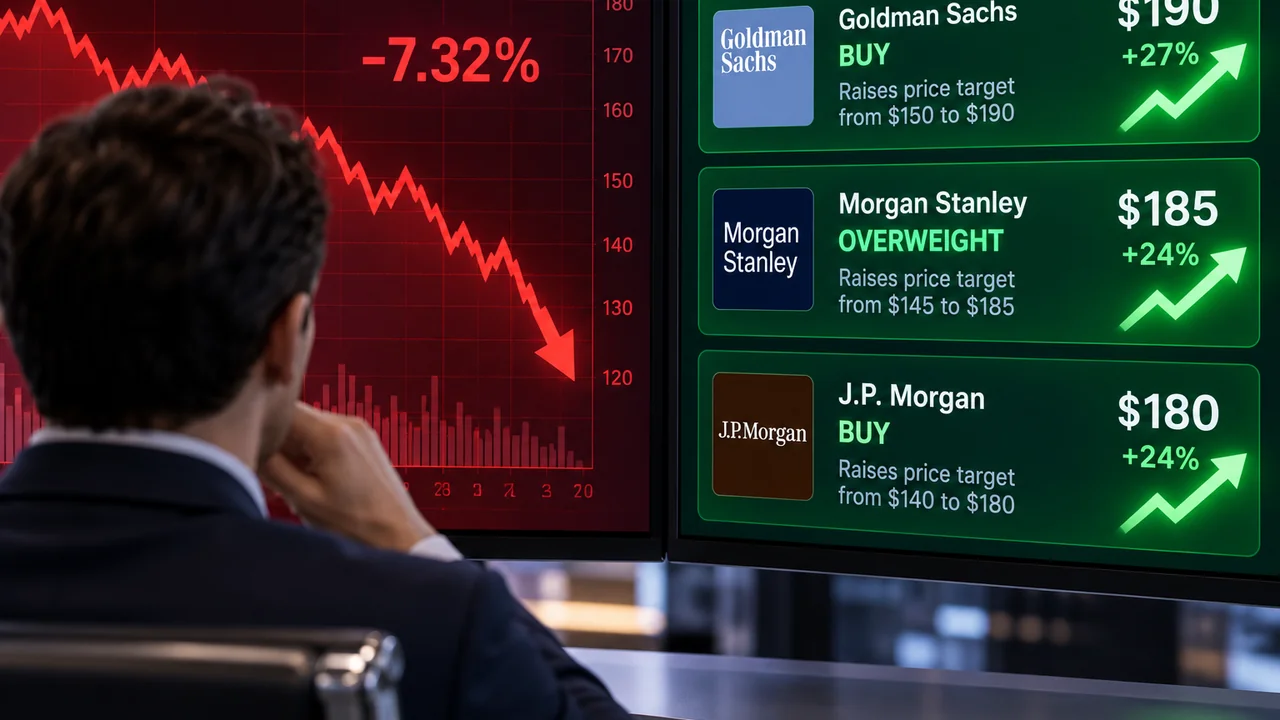
AMD fell over 8% Thursday on Lam's supply warning and PC-market softness, overwhelming a steady drumbeat of bullish notes. BofA's Vivek Arya lifted his target to $720 from $620, Stifel's Ruben Roy went to $700 from $635, and Susquehanna's Christopher Rolland moved to $620 from $550. Shares were up roughly 1% in Friday premarket.
Micron fell 6.26% to $856.49, SanDisk dropped about 8%, and Western Digital slid roughly 6.4% to $354.19 into its print. After the close WDC delivered fiscal Q1 2027 revenue of $4.38 billion, up 55%, non-GAAP EPS of $4.64 — a $0.54 beat — non-GAAP gross margin of 58.1%, and cloud revenue of $3.9 billion at 88% of the mix, with Q2 revenue guided up 66% to 72% year over year. The stock still traded lower after hours near $337.
OpenAI is closing in on up to $30 billion at a $1.25 trillion pre-money valuation, led by UAE investors and Coatue — below the $1.4 trillion-plus reportedly sought earlier in the week. CFO Sarah Friar framed it as an opportunistic bridge with a possible 2027 listing. Anthropic is preparing an IPO as soon as November at a valuation of as much as $2 trillion, with some investors arguing for closer to $1.5 trillion. Neither is publicly traded today.
Tesla reported flat revenue of $28.0 billion, GAAP operating income down 56% to $718 million, and non-GAAP EPS of $0.48 versus about $0.45 expected, with R&D up 69%. Management trimmed 2026 capex guidance to roughly $20 billion from $25 billion-plus, and Q3 capital spending of $4.7 billion came in $3.2 billion below consensus. Shares fell about 3.3% post-market.
The 10-year Treasury yield fell 19.3 basis points to 4.952%, its lowest since mid-September and the largest daily decline in about three and a half years, as money fled tech for safety. Treasury ETFs rallied hard on the flight-to-quality bid, helped along by Middle East geopolitical tension and firmer oil.

 AI Stocks